In the Beginning | Ramesh Mario Nithiyendran


Curated by Jaqueline Doughty
Ian Potter Museum of Art | Melbourne, Australia

22 Nov 2016 – 26 Feb 2017

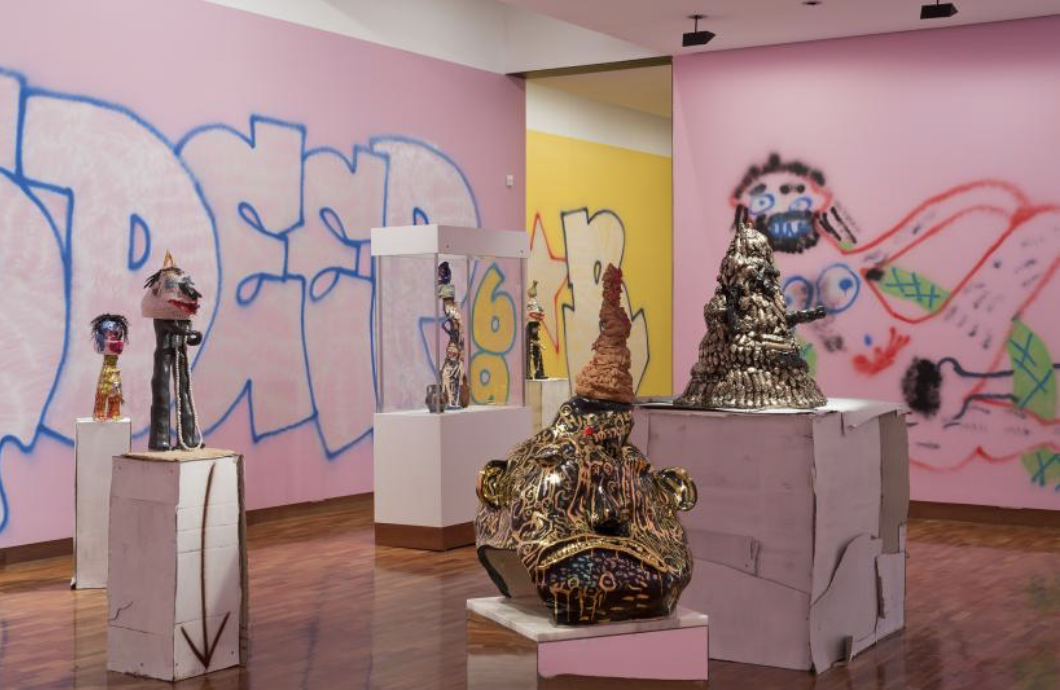
It is without question that ceramics are trending high in the contemporary art world. From the witty urns of Grayson Perry, and the evergreen vessels of Betty Woodman to the Modernist interventions of Sanné Mestrom, some of the most exciting exhibitions of 2016 have turned the spotlight towards the malleability of the medium.

Enter Ramesh Mario Nithiyendran.

See full article at this is tomorrow Contemporary Art Magazine, here
Published 26 January, 2017

[Image : Ramesh Mario Nithiyendran: In the Beginning, installation view at Ian Potter Museum of Art, 2016 / Credit : Photo by Christian Capurro]

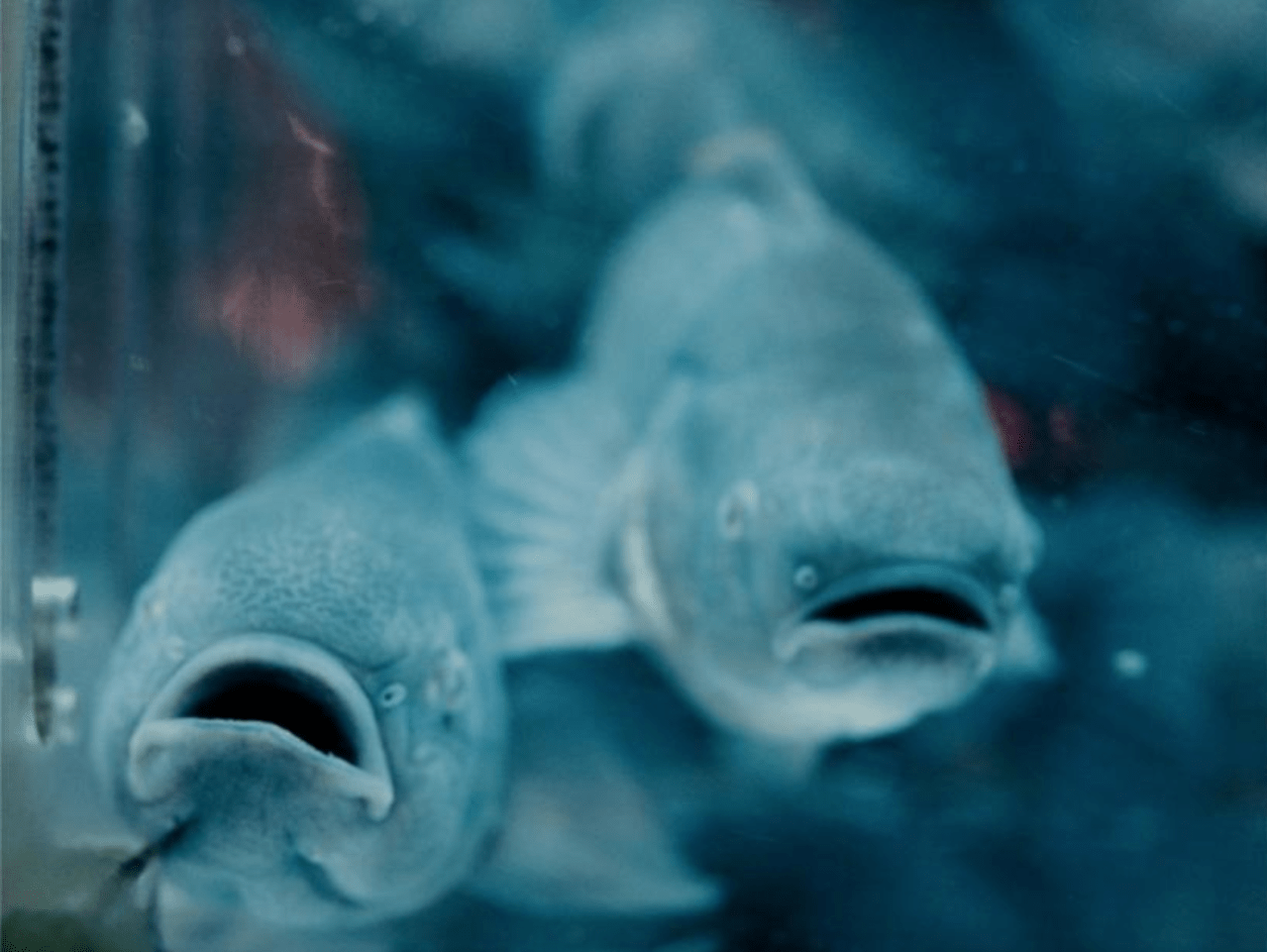
THENABOUTS | Philippe Parreno

ACMI | Melbourne, Australia
6 Dec 2016 – 13 Mar 2017

In the darkened subterranean gallery of ACMI, The Projectionist draws the theatre curtains. Adjusting the width of the screen, the gesture is both performative and practical. The Projectionist announces the upcoming film and proceeds to press play.

The séance begins.

See full article at this is tomorrow Contemporary Art Magazine, here.
Published 16 December, 2016

[Image: Philippe Parreno, Invisible Boy, 2010 (film still) (c) Philippe Parreno]

SHADOW SITES at Next Wave

Curated by Samantha McCulloch and Frances Wilkinson for Next Wave
Centre for Contemporary Photography, Vic / National Storage Collingwood
1 April – 22 May 2016

“How is the value of art renegotiated by being relocated from its proverbial pedestal in the gallery, sidelined to a (shadowed) storage space?” – Frances Wilkinson, co-curator [1]

Curated by Samantha McCulloch and Frances Wilkinson as part of the Next Wave Emerging Curator’s Program, ‘shadow sites’ features new works by seven artists using various media to explore the relationship between artwork, archive and site. In an act of inversion, ‘shadow sites’ liberates the document from the darkness whilst relegating its subject, the original, to the corrugated confines of a nearby storage facility.

See full article at this is tomorrow Contemporary Art Magazine, here.
Published 1 June, 2016

[Image : Rudi Williams, Window, Bode Museum Berlin, 2016. Type C Print. 1200 x 1800mm. Image credit: Alan Weedon. Website : http://www.ccp.org.au]

Paul Yore’s Lurid Dystopia at Neon Parc


Tinning Street | Brunswick, Australia
22 April – 18 June 2016

Paul Yore’s work speaks for itself – or rather, shouts out loud, and at times, even sings. Greeted by an unsettling high pitched rendition of the Australian National Anthem, resonating from a dizzying display of colour, kitsch and constructed chaos, his current solo exhibition presented at Neon Parc is a sensorial overload, to say the least. Audiences are lured by bright colours, shiny objects, flashing lights and revolving penises; all of which rapidly become nauseating, as the gallery is reimagined as a lurid dystopia.

Exploring personal and national narratives of identity – from the politics of gender and religion, to a critique of Australia’s violent history and consumer driven culture – the artist lay bare his frustrations (“I’m going crazy mum!”). Excess comments on excess in Yore’s latest series of tapestries and mixed media installations; each a colourful bricolage bombarded with popular vernacular. His application of diverse materials and references speak to a wide audience, rendering it a highly accessible and potent exhibition. This is enhanced by a clever balancing of the tension between humour and truth. One is often left unsure of whether to smirk and giggle or cry in despair; an uncertainty which lingers beyond the gallery door, prompting deeper introspection about the issues raised in the works.

The exhibition marks the return of the Justin Bieber motif that led to the police raid and subsequent charges of child pornography (later dismissed) against Yore for the ironically titled installation Everything is Fucked at Linden Centre of Contemporary Arts in 2013. In Slave 4 U, an altarpiece that juxtaposes religious iconography with celebrity pin ups, a young Bieber is depicted alongside video footage of a weeping Kim Kardashian; an iconoclastic comment on 21st Century idolatry and society’s shifting values. Yore’s unwavering persistence is significant, reaffirming his position as a driving force for local dialogues surrounding censorship in the arts. His case has greatly contributed to the slow maturation of arguably one of the more censored countries in the Western artworld.

Injustice is explored widely throughout the highly charged oeuvre. Strong references are made to the ongoing impact of European invasion in works like Spoils of War. Slogans such as “White Trash Australia has a Black History” and “Dumb Genocide Nation” are juxtaposed alongside KKK imagery and an Australian flag in the shape of a swastika. An innocent and multicoloured heart shaped sign pokes out of the central shrine reminding us that ‘Love is Everything’…

Further to this (and as to be expected) there is no shortage of homoerotic paraphernalia. Yore continues his exploration of gay politics, overtly negotiating homosexuality in a country in which marriage equality continues to be condemned. A rainbow bears the line “Let he who is without sin cast the first stone” – Who are we to pass judgement? – he asks.

With the boldness of Tracey Emin and the pop appeal of Grayson Perry, Yore joins the crusade of influential artists using the language of tapestry as a political tool, exploring questions of gender whilst challenging traditional hierarchies of art and craft. The artists’s inner consciousness explodes across a series of elaborate textile works, each splattered with intense and often aggressive slogans (“Tony Abbott (just fuck off and die)”). These neo-punk tapestries are at once a cathartic meditation for the artist and a confronting wake up call to the viewer. Whilst the softness of the medium opposes the vulgarity of the statements, these quilts offer no comfort. The work is deafening and I am grateful for more minimal (and text free) pieces like Dreaming Is Free and Computer wrld that offer moments of relative quiet amongst the mayhem.

On entering the Tinning Street gallery, one does not just step into the psychedelic world of Paul Yore, rather a frighteningly raw microcosm of the media saturated lives that we all inhabit. The artist offers audiences both a sobering reality check and a stimulating space in which to confront the complexities of the Australian identity. Yore holds a mirror to the spectacle of our society that is difficult to turn away from, and at times even harder to face.

This article was originally published by Art Kollectiv in April 2016

Sanné Mestrom’s Leftovers

RMIT Project Space | Melbourne, Australia
8 April – 12 May 2016

A perfect circle of glass, once belonging to Stephanie Shield, is wedged into an imperfect ceramic lump; the smooth edge of the glass forcing rough cracks through the clay. A touch of terracotta seeps out of Mira Gojak’s unwanted copper pipe, subtle, but enough. The gentle fluidity of Elizabeth Newman’s rainbow shower mat, opposes the solidity of the stark ceramic form atop which it is draped. Contrasting materials converse in Sanné Mestrom’s series of unexpected sculptural encounters.

Mestrom’s ceramic sculptures directly respond to, and incorporate, the discarded scraps of “more established” artists. In her solo exhibition Leftovers at RMIT’s Project Space in Melbourne, Mestrom reimagines each remnant through a series of formal yet playful ceramic interventions. The once superfluous offcuts are reassigned worth, elevated to the status of contemporary art. Trash becomes treasure in this autobiographical exploration of both material and personal relationships.

Mestrom’s ongoing concern for the formal is evident; shape, line, form, mass, balance and texture are all considered. The potentials of positive and negative space are also closely explored. The banal is transformed into a series of unique abstract arrangements that address the artist’s modernist concerns for material, process and technique. The resulting sculptures, dictated by chance, are minimal, sophisticated and sincere.

Whilst the artist had little control over the materials that she would receive for this project, each sculpture is the manifestation of a series of conscious decisions that began long before the “found” objects reached her studio. Despite the initial air of abandonment to each object donated, there was also a process of selection involved, a reinstatement of recognised potential, that particularly inspired Mestrom: “These weren’t just any old scraps, they were cast out in the course of another artist’s own careful editing process. Each rejected remnant was immediately imbued with new value simply by being selected – picked up off the floor and handed over as ‘something’. The artistic process thus stretches far beyond the physical manipulation of the ceramic intervention. It began with a string of humble letters.

These letters are presented in a smaller adjoining space where they offer further insight into the provenance of the exhibition, and the personal life of the artist. Viewers are invited to sift through polite exchanges between Mestrom and gallery assistants, curators and directors – and if she was lucky, her artistic peers and role models themselves. Each of the artists contacted has profoundly influenced Mestrom’s practice today. For those obliging to participate, these personal narratives of generosity breathe warm life into the resulting sculptures. This is emphasised by the title of the works (ie. ‘Dear Lizzy’ (Elizabeth Newman) ). Each sculpture becomes a love letter. Recalling the relational works of Sophie Calle, the letters demonstrate the vulnerability of the artist that is central to this project. By displaying this documentation the exhibition is shifted from an objective exploration of materiality, to an intimate self portrait of the artist.

The series of exchanges also reveal the business side of the art world and associated hierarchies. Amongst those “artistic-heroes” contacted to no avail were international bigwigs, Martin Creed, Isa Genzken, Barbara Kruger and Roni Horn. As such, notions of value are addressed not only by the transformation of the received remnants, but also by the absence of those unattainable – which if present, would further raise complex questions about appropriation and the global art market.

Sanné Mestrom often describes her work as “art about art”. Leftovers is that. But it is also more. I am grateful to the artist for sharing a rare glimpse into the personal side of her practice. Whilst her work is as visually and conceptually strong as ever, it was comforting to be reminded that we are not alone in feeling at times intimidated, rejected, or insignificant. And it is these moments that make the support that we do receive, all the more valuable – and most certainly worthy of being proudly presented atop a shiny black pedestal. For after all, it is sometimes the leftovers that are the best bit.

SOUNDS LIKE FUN at New 16

Anna Varendorff with Haima Marriott | here there are infinite arrangements NEW 16 at Australian Centre for Contemporary Art | Melbourne, Australia
5 March – 8 May 2016

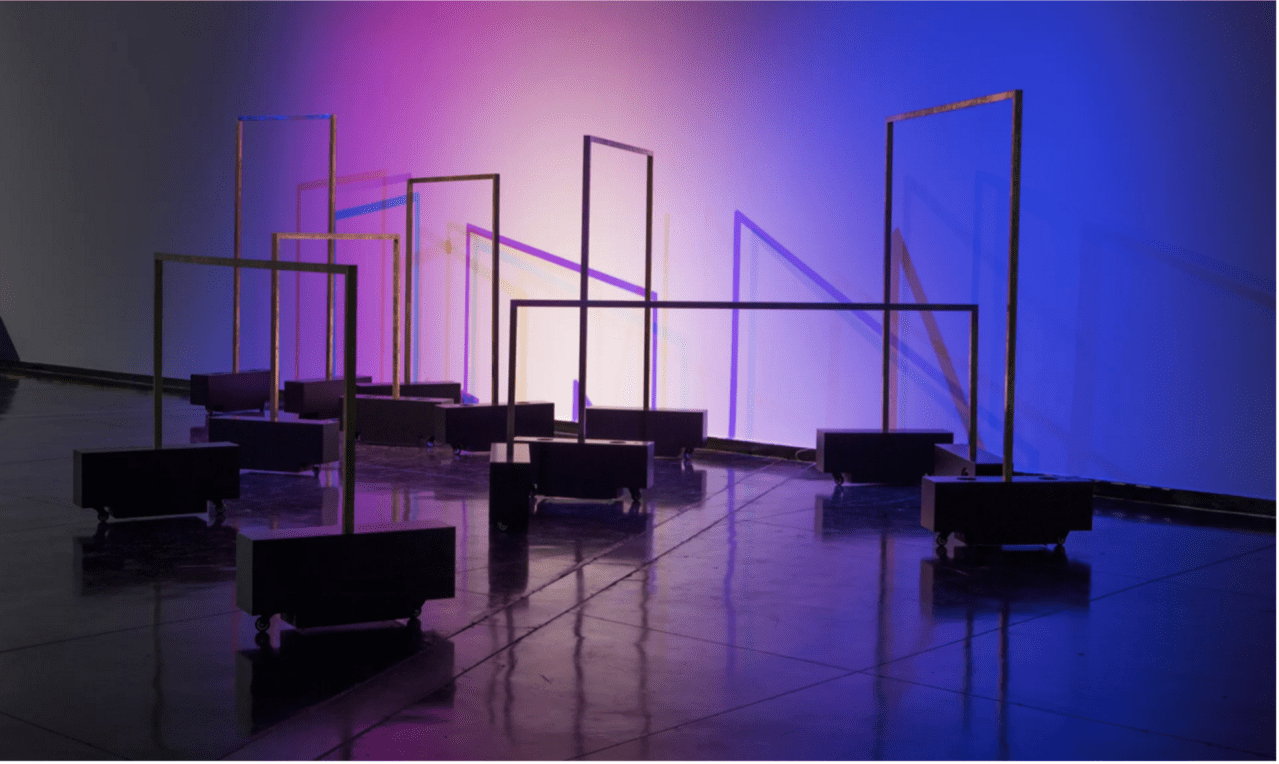
Curated by Annika Kristensen, NEW16 at the Australian Centre for Contemporary Art showcases the recently commissioned works of eight emerging Australian artists: Jacobus Capone, Catherine or Kate, Julian Day, Gabriella Hirst, Tanya Lee, Mason Kimber, Liam O’Brien and Anna Varendorff with Haima Marriott. Working across various media (with a certain emphasis on sound and video), the artists reveal an overarching interest in the artistic process, human connectedness and the construction of space. One work that particularly speaks to all of these themes, is here there are infinite arrangements by Anna Varendorff with Haima Marriott.

here there are infinite arrangements is a flexible, sculptural-acoustic landscape that provides audiences with a rare opportunity to explore sonic, spatial and social relationships. Seven rectangular black-and-brass frames are gathered in a cluster. Two vertical posts are connected at the top by one horizontal bar to form each apparatus. All differ in height and width. Although seemingly positioned at random, the installation is neat, minimal, sophisticated. here there are infinite arrangements appears as a kind of chic jungle gym – an invitation to play.

The seven frames are set atop wheels (which at a closer glance appear to support the speakers from which the sound emanates). As the participants compose their own Dada-like overture, a new sculptural composition is simultaneously orchestrated as the apparatus are reassembled into new groupings. Linear shadows bathed in kaleidoscopic light creep across the wall and floor; growing and shrinking–appearing and dissolving. Visitors are momentarily removed from the constraints of reality and transported to an unfamiliar space of free play. The gallery is enlivened as a place for curiosity, experimentation and collaboration as the traditional relationships between art object and audience are blurred.

While participants quickly learn how to activate the music, the sound heard remains ultimately detached from its original source. This renders the apparatus a type of acousmatique instrument, free to be played by all who encounter it. By veiling the source of the sound, Varendorff and Marriott invite participants to carefully consider how spatial and sonic arrangements are consequent to physical interaction. In this scenario, sound shifts from a mysterious diversion to a key instrument in the construction of the interactive narrative. Here, the participant takes agency and temporarily becomes the producer.

Although certain viewers remained hesitant to touch the work (let alone reconfigure it), here there are infinite arrangements does not seek to intimidate. The non-linear and abstract nature of the sounds and sculptures means that there is no ‘wrong’ composition. Control is surrendered as the artists embrace the unknown, generously offering co-authorship to the audience/participants. here there are infinite arrangements is a collaborative work in constant flux, definitive resolve and resist a singular hand to determine its outcome. Each movement subsequently affects the experience of the surrounding artworks in ACCA’s New16. For some viewers, this might enhance the moment, for others it may disrupt it.

As children we are constantly encouraged to engage in play as a means to develop cooperation, creativity and confidence (these are just a few of many proven social and cognitive benefits). Play can also be relaxing, not to mention fun. So why do we not make more time for it as adults?

By merging art and play, sculpture and sound, audience and artwork, Varendorff and Marriott encourage us to reconsider a myriad of relationships, both within and outside the gallery walls. Not just a treat for the senses, the work offers a contemplative space in which to freely explore unknown possibilities. here there are infinite arrangements is a refreshing reminder of the benefits of simply losing one’s self in play.

This article was originally published by Art Kollectiv in March 2016.

EMPTY LOT IS FULL OF HOPE

Abraham Cruzvillegas | Empty Lot
Tate Modern | London, United Kingdom
13 October 2015 – 20 March 2016

After five months of anticipation, Abraham Cruzvillegas’ ‘Empty Lot’ will leave some viewers disappointed, some pleasantly surprised, and others contemplating their own position in a world of uncertainties. The installation that features 240 triangular plant boxes filled with soil gathered from 36 sites across London – from the gardens of Buckingham Palace to Queen’s Woods and Hackney City Farm – is the latest to welcome visitors to the Tate Modern’s Turbine Hall.

Raised by a network of scaffolding, it is from the upper level that the installation is best viewed. To the frustration of many, who like myself were eager to stroll amongst the aisles of the plots, a distant view is all that is offered. Nevertheless, this view did allow for the impressive geometric pattern formed by the garden beds to be admired, as well as appreciation for the subtle colour variations of the different soils. It is a seemingly understated installation for the prestigious space that has previously wowed visitors with statement pieces by the likes of Louise Bourgeoise, Anish Kapoor and Olafur Eliasson. But ‘Empty Lot’ it is not intended to overwhelm. Its very modesty in an increasingly ostentatious city is in itself rather comforting.

One of the more interesting aesthetic elements of the installation is the series of lamps scattered amongst the ordered plots; each a humble bricolage of discarded materials found in the gallery and surrounding areas. This act of recycling is characteristic of the Mexican artist’s ongoing project, Autoconstrucción (self-construction)a project about, “scarcity, solutions and ingenuity… And how you can conceive a philosophy of life that you can make something out of nothing” (as quoted by Walker Art Center). Cruzvillegas applies this metaphor for identity to ‘Empty Lot’; “My hope is that something can grow, that something can happen and in a way I look at it as a self-portrait…I am an empty lot,” he muses (as quoted by Mark Brown, The Guardian, 12/10/15). This element of hope is central to the work. Although well-lit and watered regularly, the contents of the soil and their future remain very much uncertain. Further optimistic, Cruzvillegas also hopes that “something can happen in the worst of conditions” (as also quoted by Brown, 12/10/15). A hope not just for the work, but for our greater society in its current state of unrest.

The modesty and duration of ‘Empty Lot’ allow for much needed contemplation and introspection. In a world that has become more impatient than ever, in which artworks are being digested at a rate faster than you can say, “I could’ve done that”, the work embraces a recent shift towards the universal Slow Movement. It demands patience. It encourages reflection and propagates curiosity. Constantly evolving, it must be revisited. The artist encourages visitors to look closer, to wait and to wonder as Time’s pencil slowly shapes the outcome.

With patience, the work nurtures acceptance. Despite the occasional “guerrilla gardener” (one visitor threw an apple into the soil), the future of the plots is out of one’s control. It must be accepted that there is a possibility that nothing may grow at all. Just like the Sublime works of Caspar David Friedrich and J.M.W Turner, ‘Empty Lot’ is a reminder that nature ultimately governs all.

I’d originally hoped to return to the Turbine Hall to discover a lush forest. I wanted to be wowed by the thriving greenery. However, after reflecting upon the concept of the installation, its place in London and mine as well, this had changed. I became quite attached to the romantic notion that after five months of waiting and wishing, I might return there only to discover that no change at all had occurred, but for the occasionally weed struggling to sprout. Would many be disappointed? Probably. But if there were no visible change to the plots, would the work be deemed a failure? NoAnd this is perhaps the most important thing to take away from the installation. Regardless of the aesthetic, superficial outcome, the work is successful in its ability to bring hope. For it is this hope that helps us cope with the waiting and the unavoidable moments of uncertainty. And then? If things aren’t so green on the other side? We are reminded that, no matter how optimistic we may be, some things are simply out of our control. To understand that, is to grow.

Betty Woodman’s Theatre of the Domestic

Institute of Contemporary Arts, London
03 February – 10 April 2016

From the colourful urns of Grayson Perry and the BBC’s new reality series The Great Pottery Throwdown to your favourite café serving up cortados out of a hand spun cup, there is nothing cooler right now than contemporary ceramics. But before there was cool, there was Betty Woodman. 85 years brilliant, the groundbreaking artist is finally receiving the recognition she deserves with her first solo exhibition in the UK. Theatre of the Domestic at the Institute of Contemporary Art in London showcases recent and new mixed media works by the prolific artist. Over the years Woodman has forged a happy marriage between art and craft, boldly collapsing traditional hierarchies to mould our understanding of contemporary ceramic practice.

Whilst she now defies categorisation, a potter, a painter, a sculptor, an installation artist, Betty Woodman was first and foremost a ceramicist. Today her work continues to be informed by the form and iconography of the archetypal ceramic object, the vase. Vases are portrayed in paintings. Paintings are featured on vases. Paintings take shape around and in conversation with actual vases. Paintings become tables for vases. Fragments of deconstructed vases are scattered and composed to form a dance across the gallery wall. Woodman’s playful reinterpretations of the vase come together to act out The Theatre of The Domestic. Once limited to holding flowers or sitting neatly upon a kitchen shelf, the function of the vase is rendered infinite.

Despite these endless possibilities however, the vase, symbolised as vessel, will always carry connotations to the female body, This is embodied in ‘The Kimono Ladies’ in which ceramic vases are loosely draped in fabric to take on the form of women. Painted in an eclectic array of colours and patterns, ‘The Kimono Ladies’ are a playful depiction of women achieved by use of simple shapes and gestures. Woodman doesn’t want audiences to be dazzled and distracted by her craftsmanship (although she does acknowledge that the medium must be mastered before it can be deconstructed). The incorporation of Eastern fabrics is a nod to the Orientalist interests of Modern painters like Matisse.

Woodman’s oeuvre is constructed of many layers of meaning like this, regularly speaking to both the rich history of the vase, and that of Modern art. Theatre of the Domestic also reveals visible references to Japanese screen printing, Roman frescoes, Etruscan pots not to mention other painters such as Picasso, and Bonnard whose work she admits to being “totally besotted” with. Layered with the languages of traditional ceramics and that of Modern painting, Betty Woodman creates her own, new language.

The final act of Theatre of the Domestic reaches a crescendo in the upstairs galleries of the ICA. Comprised of four large canvases, ‘The Summer House’ (2015) stretches across the entire wall of the intimate and rather domestic space. The work depicts a soft and humble interior; a table, topped with ceramic vessels. The artist’s palette is gentle, her brushstrokes, loose and gestural. The distorted perspective of the room invites the viewer to enter the work. However, upon closer inspection, it is visible that the work in fact enters the world of the viewer. The table painted onto the canvas becomes three dimensional, suddenly protruding into the gallery space. It is topped with a series of three dimensional painted ceramic vases, all of which, when at a distance, appear to flatten into the two-dimensional plain of the canvas. The distinction between the world of the painting and the world of the viewer is dismantled and confused.

To the right of the table, two larger urns are positioned on the floor. These are raw and unpainted, the contrast drawing focus to their form. To the left, a third urn is found subtly absorbed by the canvas. This one is painted. In transforming the object of the vase, into the subject of the painting, the domestic world collides with the very constructed, world of “high” art. Although wary of entering the domain of the painter, Woodman wanted to present a new way of looking at painting – and so the three-dimensional ceramic object was added, offering the viewer a different experience from each angle.

Unlike many contemporary artists, Betty Woodman does not shy away from the decorative. A self- proclaimed Formalist, the artist hopes that viewers will take comfort and delight in her work on an aesthetic level. Her practice however, is not solely defined by beauty. Its continuing appeal lay in the work’s ability to be at once decorative and conceptual. Woodman again displays her defiance towards categorisation – demanding, after all, why can’t it be both?

This aesthetic accessibility combined with the familiarity of the vase form, allow for viewers of all walks, to enter into the work. Woodman hopes that, after spending time with her work, viewers will find moments in which to connect with it and develop their own personal understandings. She hopes to invoke a sense of wistful nostalgia. In transforming her practice from that of production ceramicist to contemporary artist, Betty Woodman creates a space for her vases in which people can encounter them and engage in meaningful dialogue.

Whilst it is unusual for the ICA (known as a frontrunner for contemporary culture) to be presenting a UK debut following the artist’s retrospective at New York’s Metropolitan Museum of Art ten years ago, it is refreshing that such an oversight be acknowledged. Embraced with enthusiasm by the public, Theatre of the Domestic has certainly rectified this. The work of Betty Woodman speaks to audiences both old and new. Layered with references to the history of art and the tradition of ceramics, her work is also playful, happy and alive. As delightful as it is challenging, Woodman’s installations reshape our understanding of what ceramics can be, and as such, what contemporary art can be; conceptually bold and pleasantly refreshing.

ART AND THINGS AND APOCALYPSE NOW

Emma Edmondson’s inquiry into the state of things in the event of a societal collapse

The World Without Us | The Vaults Gallery, London
29 September – 25 October, 2015

Through the use of everyday materials, UK artist Emma Edmondson examines the relationship between humans and our surroundings in a rapidly changing world. Her work features in the exhibition trilogy, The World Without Us alongside multimedia artist Rose Cleary. Influenced by the seminal writings of Alvin Toffler and drawing inspiration from our anthropological past, objects are repurposed in an imagined dystopian future. Edmondson’s work is simultaneously a critical warning against unconscious consumption and a testament to human innovation, adaptability and creativity.

Fundamentally sculptural, the artist’s method is as environmentally conscious as her message. All of her materials are recycled – all of her sculptures for that matter, are recycled. Her work is in a constant state of flux, with each sculpture adapted before exhibited again. Fluid and transient, this process is a nod to evolution and a challenge to the art market.

The direction of the work is largely driven by the materials given to the artist, making her practice a collaborative adventure. Each material encountered poses a new challenge to Edmondson, who is excited about the future form it will take. The result is often bright and textural, with a modest dose of kitsch. Edmondson’s lust for creating radiates through the unique playfulness of each evolving sculpture.

All objects are fashioned by the artist’s own hand. A shiny cloth knitted from salvaged cassette tape is draped atop a tall, leaning structure of papier mâché, testing its balance. A soft, sluggish form, sewn from scraps of animal-print spandex is nestled in a bed of metallic shred and polystyrene. Visitors are invited to take a seat in the ‘library’ and browse through collaged publications found in the shelves amongst a series of small baked sculptures. By adopting traditional craft techniques such as weaving, papier mâché, sewing and baking, Edmondson challenges the enduring hierarchy between art and craft and also reminds viewers of our human capabilities.

Rough faux-stone is dressed with hot pink gloss to form a monument that twists upwards like Tatlin’s tower, complete with a golden phallus. The motif of the stone is repeated throughout the exhibition, sometimes faux, sometimes real and on occasions indiscernible. The resulting landscape is at once familiar and deceiving, alluring and repelling. It invites conversation. Through this recurring presence of stone, the artist pays homage to our ancestors whose ability to carve the first tools out of stone represents a fundamental step in the history of the development of modern civilisations.

The tacky, disposable materials that are juxtaposed with the stone motif provide a stark contrast. New and old, smooth and rough, temporary and enduring, artificial and natural… The present and the past collide to suggest a possible future in harmony. Edmondson breathes new life into mass- produced “junk”, rendering otherwise obsolete items, meaningful.

Despite the sombre tone of The World Without Us, the abstract and playful nature of Edmondson’s sculptures allow for creative dialogue about the new purposes that waste can take on as well as the potential role of art in an apocalypse. Having both a practical and philosophical direction, the work succeeds in engaging a broad audience. It is visually alluring, conceptually provocative, and frighteningly relevant.

FROOSH, FWASH, SLOOSH, WHUPP!

Christian Marclay | White Cube (Bermondsey), London
28 January – 12 April 2015

White Cube’s major solo exhibition of works by Christian Marclay is a comprehensive exploration of the relationship between text, sound, image and performance. The exhibition presents video installations alongside works on paper and canvas, complemented by a series of Fluxus-inspired Happenings. With references to Pop Art, Action Painting and the history of Performance Art the exhibition is a celebration of Post-War artistic achievements, which are re-imagined for contemporary audiences.

Upon entering the gallery, one is immediately drawn into the darkness of ‘Surround Sounds’ (2014), a silent cacophony of onomatopoeic comic strip cuttings. The installation comprises of four large synchronised screens projecting a series of animated words collated from Superhero narratives. The sound does not come from an audio track, rather from this lexicon of Klangs, Ktangs, and Kliks that blur across the screens, transporting the viewer into a loud world of action. Whoooosh, Zoooom, Whrrrr, the playful use of language is exciting. Each word is brought to life, not only by its onomatopoeic quality, but also through Marclay’s adoption of basic design and animation principals: composition, size, shape, colour, speed, and direction. A small tic, creeps around the bottom of the screens, tic.. tic.. tic.. building tension and increasing in pace; tic, tic, tic, tic.. until BANG! A heavy THOOM suddenly thuds from the ceiling to the floor. The screen is soon attacked with Beep! Beep! Beeps flashing manically. Collaged cuttings are choreographed to create a dizzying frenzy in this sonic adventure.

The exhibition of Marclay’s paintings proved a fitting accompaniment to ‘Surround Sounds’ with their continued use of Pop imagery. They also provided an interesting segueway into the examination of Action and Performance. The works on paper and canvas bring together the two very distinct movements of Pop Art and Action Painting, both of which appeared during the 1950s in America yet remained very separate. The friction between the democracy of Pop Art and the elite nature of Abstract Expressionism, in this case, Action Painting, is negotiated by the artist’s union of the two forms.

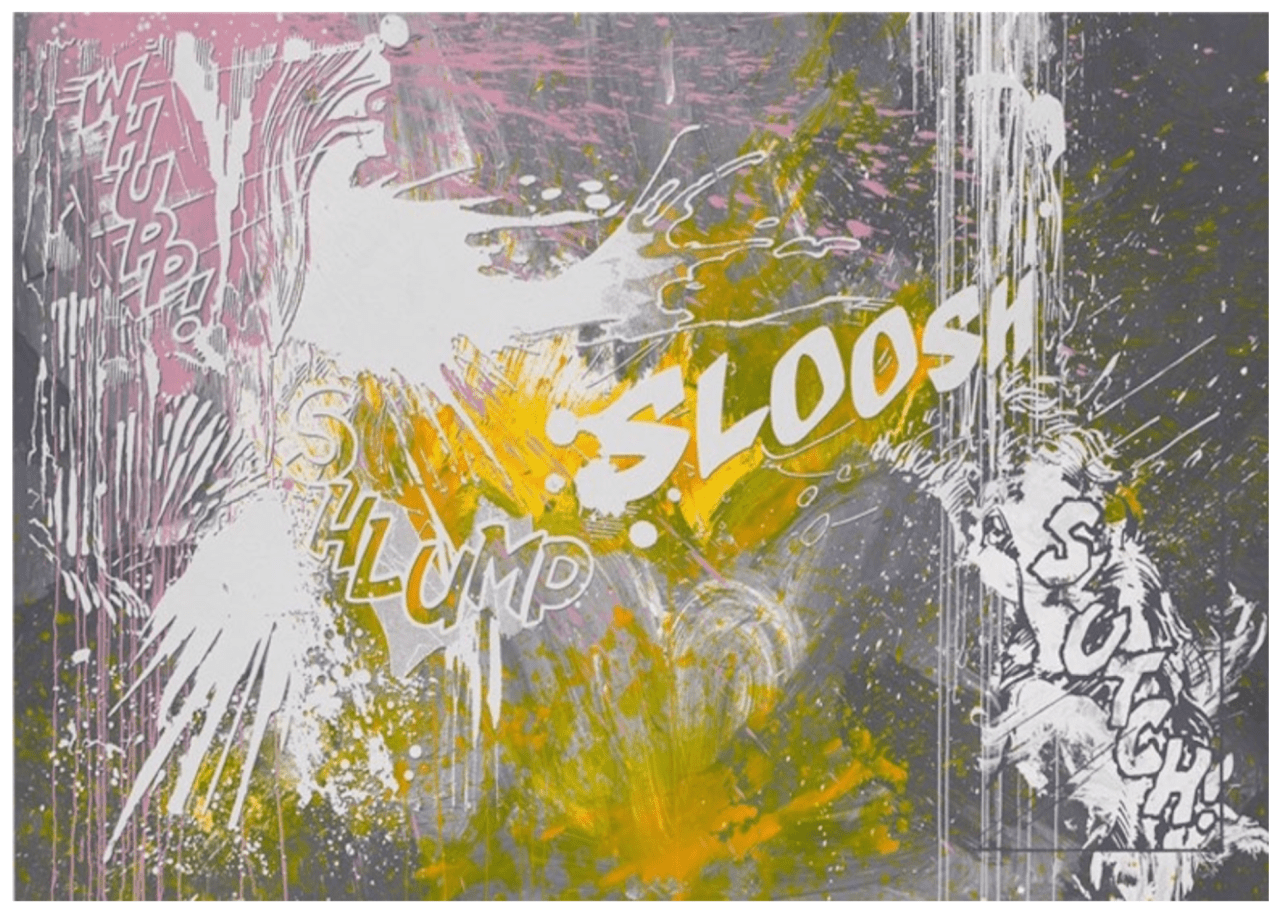
Snippets of Pop text are printed over performative splatters of paint. Plop, Glop, Splish, Slup. These “wet” words, once again demonstrate the artists’ fascination with sound mimesis whilst also alluding to the liquid quality of the paint that is poured, dripped and splattered across the surface of the works. Here Marclay uses the text of Pop Art to evoke the gesture of Action Painting. Action plus

the sound of the action are ironically brought together to produce a silent, static, object. Does Marclay’s merging of the two conflicting movements render the popular, elite – or is the elite rendered popular? The traditional hierarchy is negated.

In 1958 art critic Harold Rosenberg defined Action Painting by its capacity to transform the canvas into “an arena in which to act.” He explained, “what was to go on the canvas was not a picture but an event.” As a result, Action Painting is seen by many as the forbearer to the Fluxus movement, Happenings and the birth of Performance Art. Marclay’s video and performance works such as ‘Pub Crawl’ (2014) thus mark another logical development in his exploration of the everyday and the performative.

‘Pub Crawl’ is a participatory performance. The installation features a series of eleven video projections that trace the artist’s journey through the desolate streets of East London, early in the morning after. The tapping of empty bottles and cans produces an echoing soundtrack. This could be interpreted as a comment on contemporary drinking culture, or simply, a reinvigoration of everyday waste. With the presence of sound, the text of the former works is rendered redundant, and so abandoned. The videos are projected down either side of the main corridor walls. As the shadow of the viewer’s legs is cast onto the walls, one has no choice but to join the crawl. The passive viewer is unwittingly made the active subject.

The exhibition culminates in the North Gallery where a series of live Fluxus happenings have been scheduled for the duration of the exhibition, bringing together the investigation of text, sound, image and performance. The result is a unique sound recording on vinyl, presented in a limited edition cover printed with a sound-mimesis-meets-action image. Available to purchase for just £25, these Happenings render the rarified art object accessible to a wider public. Whoop, Wahh, Woo!